Strengthening women’s authority in media and democracy: highlights from “Visible and Heard” event
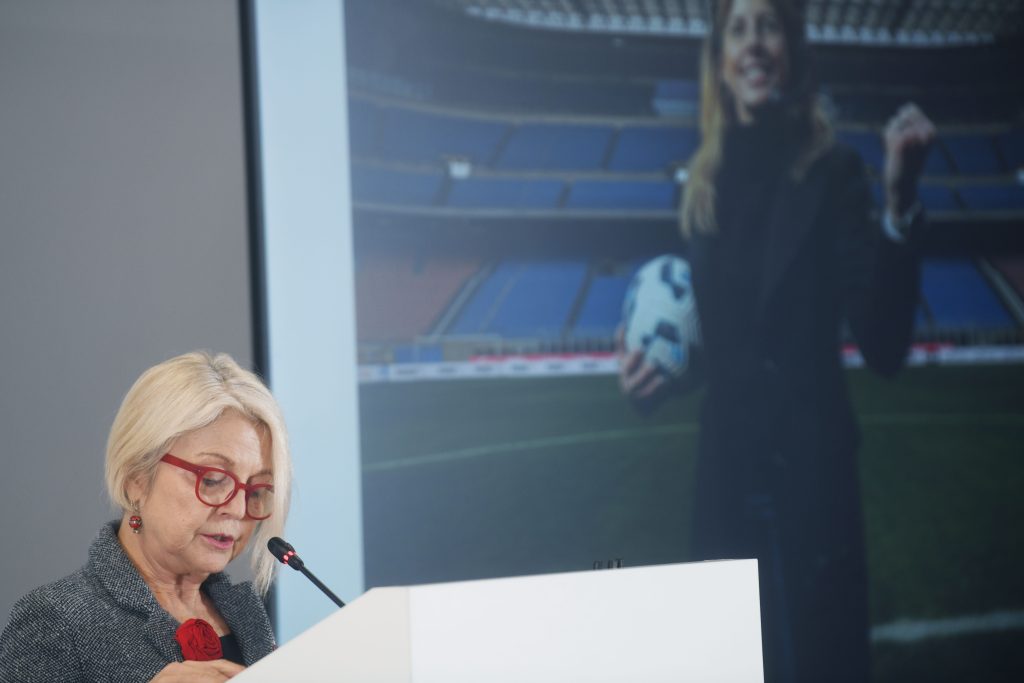
“Visible and Heard – When Voices Become Change,” held on 5–6 December in Ljubljana and organized by the association Ona Ve – which is part of the ENWE network – proved to be an intense space for dialogue rather than a traditional conference. Over two days of work, networking, and exchange of experiences, the event aimed to strengthen the presence and authority of women in the media, politics, and the public sphere, creating connections among expertise, courage, and new voices.
The association’s president, Mateja Malnar Štembal, highlighted the deep link between women’s visibility and the quality of democracy, recalling the founding of the association in 2021 and the growth of its network, which today includes more than 630 experts ready to take part in public debate.
The European dimension and the political context were central. In particular, European Commissioner Marta Kos drew attention to persistent structural inequalities – the so-called “damned 20–30%,” which still represents the share of female representation– and to the importance of data in making the scale of the problem visible. Kos also stressed that the protection of democracy, media freedom, and elections is closely connected to the defense of women’s rights, since authoritarian systems target these rights first. The President of the Republic of Slovenia, Nataša Pirc Musar, noted that for women, power primarily means the ability to create change.
Research presented in connection with the Global Media Monitoring Project confirmed that women remain heavily underrepresented in Slovenian media: only about 27% of people quoted are women, with even lower percentages in economic and political coverage. One significant finding did emerge, however: when a news story is written by a female journalist, the likelihood of including women experts exceeds 70%. The use of truly inclusive language remains very limited.
As in other European countries, Slovenia faces structural causes of inequality in the media: entrenched newsroom routines, time pressure, and the repetitive use of the same sources continue to reproduce imbalances. Digital platforms offer new opportunities for visibility but also amplify online misogyny, discouraging many women from speaking out.
The event also featured ENWE’s co-founder, Luisella Seveso, who presented Italian best practices for a more accurate and responsible way of talking about women in the media. In her contribution, she explained the operation and impact of the 100esperte.it database, as well as the European network of databases ENWE, two projects co-developed by the association Giulia Giornaliste, of which she is part of. She also highlighted an encouraging figure: according to GMMP 2025, the presence of women expert voices in Italian media has grown from 14% in 2020 to 30% in 2025, showing that structured tools, editorial commitments, and expert networks deliver concrete, measurable results.
Considerable attention was devoted to European projects, partnerships, and funding. Initiatives against sexism in the media, regional research on sexual harassment targeting women journalists, and new collaborations were presented, including the announcement of the ONA VE Leadership Academy in partnership with IEDC – Bled School of Management. Discussions around the CERV programme showed how it is the only EU instrument providing structural support for gender equality.
A specific section focused on the relationship between women and political power. It emerged that female leadership is still judged more harshly and often develops in hostile environments, making resilience, alliances, and mutual support essential.